How to Build a Multi-State Direct Specialty Care Practice
Quick answer: A specialist can care for patients across several states by holding a license in each state where the patient sits during the visit, and the fastest way to collect those licenses is the Interstate Medical Licensure Compact. Add telemedicine and one specialist becomes the answer for patients who could not find that care anywhere near them.
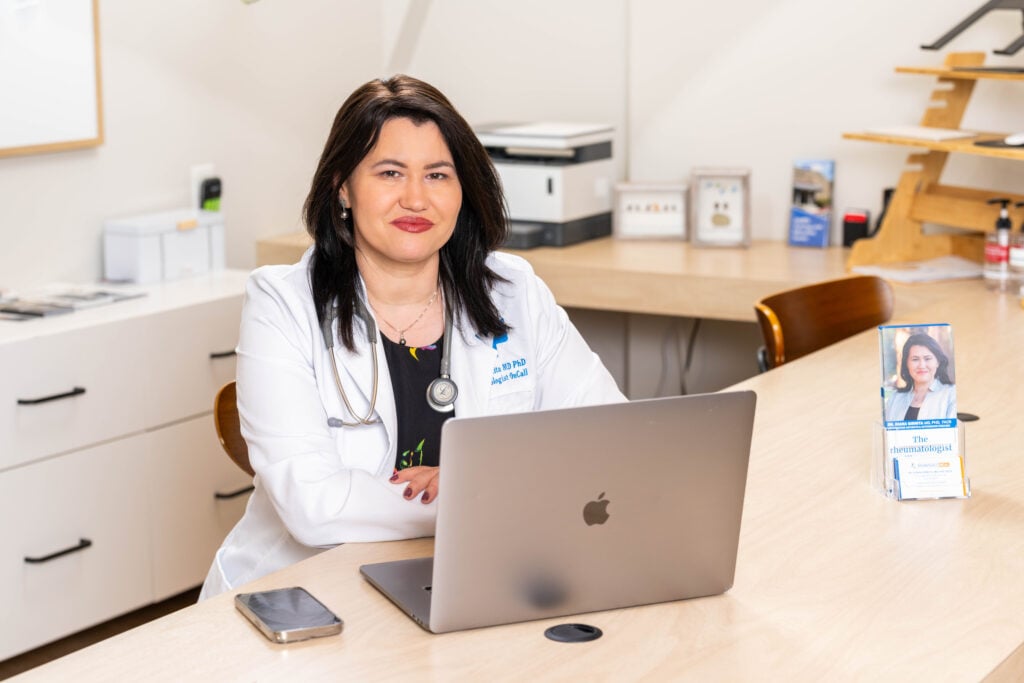
I built Rheumatologist OnCall this way. A patient in a rural county with no rheumatologist within two hundred miles does not need me to move. They need me to be licensed where they live and able to see them on a screen. That is the whole model in one sentence, and it is the part of direct care that changes who actually gets care. I wrote about the emergence of direct specialty care years ago, and this is the reach that first convinced me it works.
Key Takeaways
- You must be licensed in the state where the patient is physically located during the visit, not where you are.
- The Interstate Medical Licensure Compact (IMLC) turns a months-long, state-by-state process into weeks.
- Many direct specialists practice in five to fifteen states, which widens the patient base dramatically.
- Pick your first states on purpose: your home state, states with long specialist waitlists, and states near you.
- Verify each state’s telemedicine rules before you see the first patient, because they are not uniform.
Why telemedicine belongs at the center of direct care
For most specialties, telemedicine is no longer a feature. It is the model. A virtual-first practice removes the largest fixed cost in medicine, the real estate, and it expands your reach past a single zip code. For direct specialty care it fits the value proposition exactly: transparent pricing, unhurried visits, and access without hospital-system friction.
The demand is already there. Specialties with long waitlists, rheumatology, endocrinology, psychiatry, dermatology, sleep medicine, face structural shortages that telemedicine partly solves. If your field has a six-month wait somewhere in the country, you have a market. The question is not whether patients will accept a virtual visit. They already expect one. The question is which states you can legally serve.
The one rule that governs everything: where the patient sits
Licensing is the gate. The rule is simple and it trips up physicians constantly: you must be licensed in the state where the patient is physically located at the time of the visit, regardless of where you are sitting. A patient who lives in Ohio but is visiting family in Florida the day of the appointment needs you licensed in Florida that day.
So a multi-state practice is really a licensing strategy. Build it deliberately instead of reacting to one-off patient requests, and it becomes an engine. React to it, and it becomes a headache.
The IMLC: the fast lane to more states
Here is where the Interstate Medical Licensure Compact earns its place in this article. The IMLC is an agreement among most states (currently 44 states, plus the District of Columbia and Guam) that lets an eligible physician obtain licenses in other member states through one streamlined application, in weeks rather than the three-to-nine months a state-by-state approach can take.
There are three broad paths to multi-state licensure:
Direct application, state by state. Slow and expensive, but sometimes the only route for a specific non-compact state you need.
The IMLC. If your state of principal license is a compact member, you can get expedited licenses across member states quickly. For most physicians building nationally, this is the answer.
Telemedicine-specific registrations, where a state offers them. Narrower and cheaper than a full license, useful in select states.
Verify your eligibility and the current member-state list before you plan around it, because the compact keeps adding states.
How to choose your first states
Do not try to license everywhere at once. Choose the first three to five states on purpose:
Your home state, where you already practice and are licensed.
States with the worst access in your specialty, where patients wait longest. Those are the patients who will find you, and pay, because you are the option they did not have.
States near you, where patients may occasionally cross the border, and where word of mouth travels.
Dr. M, an endocrinologist who left a hospital group, started with her home state and two neighbors where diabetes specialists were booked out four months. Within a year she was licensed in six states and most of her new patients came from the two with the longest waits. She did not chase the whole country. She went where the need was sharpest.
What to verify in each state before your first visit
State telemedicine rules are not uniform, and the details matter. Before you treat a patient in a new state, confirm:
- Whether the state requires an in-person visit before telemedicine can begin.
- Whether it permits prescribing controlled substances by telemedicine, and under what conditions.
- Whether it requires a separate telemedicine registration on top of a license.
- Whether informed consent for telemedicine must be written or can be verbal.
- The standard-of-care expectations specific to telemedicine in that state.
Re-check these periodically. The rules change, and “it was allowed last year” is not a defense.
The setup is lighter than you think
A telemedicine-first specialty practice runs on a HIPAA-compliant video platform, a cloud EHR built for cash-pay care, a payment processor, and secure messaging. That is roughly $150 to $400 a month in technology, no office required. Malpractice coverage needs a broker who understands multi-state telemedicine, since generic policies often limit or exclude it, and underwriting can take weeks. Start that early.
None of this is the hard part. The hard part is the licensing strategy and the discipline to build it in order. Once you have it, you have something a local practice never will: the ability to be the right specialist for a patient who lives four hours from the nearest one.
Building this and want the full playbook? The licensing strategy, the platform choices, and the state-by-state checklist live in the founding member library. Join the founding round and it is yours.
Frequently asked questions
Can a doctor practice telemedicine across state lines? Yes, but you must be licensed in the state where the patient is physically located during the visit. Multi-state practice means holding a license in each of those states.
What is the Interstate Medical Licensure Compact? The IMLC is an agreement among most US states that lets an eligible physician obtain licenses in other member states through one expedited application, usually in weeks instead of months.
How many states do direct specialty care physicians usually practice in? Many practice in five to fifteen states. The number depends on where patient demand is highest and which states are in the compact.
Do I need a physical office for a multi-state direct practice? No. A telemedicine-first practice runs on a video platform, a cloud EHR, a payment processor, and secure messaging, with no office required.
How do I start a multi-state direct care practice with support? The DSC Alliance gives specialists the licensing playbook, platform choices, contracts, and a peer community. You can create a free founding account and join the movement here.
Learn more
Related from the DSC Alliance blog:
- What direct specialty care is, and why specialists are leaving insurance — the model behind the multi-state reach.
- How patients and AI find a direct care specialist — turning that reach into booked visits.
- Price vs value: what direct care specialists get wrong about what they charge.
External:
- Starting a Direct Specialty Care Practice From Scratch (Finance For Physicians) — the practical build, including the money side.
- Interstate Medical Licensure Compact — official site — eligibility and the current member-state list.
Written by Dr. Diana Girnita, co-founder of the DSC Alliance and founder of Rheumatologist OnCall, a direct specialty practice caring for patients across multiple states. To build one of your own, join the founding round. Patients can find a direct care specialist here.
About the author — Dr. Diana Girnita, MD, PhD, FACR Dr. Diana Girnita is a double board-certified physician in rheumatology and internal medicine, and the founder of Rheumatologist OnCall, the first direct specialty care rheumatology practice, caring for patients across multiple U.S. states through telemedicine and in person in California. She is a co-founder of the Direct Specialty Care Alliance (DSC Alliance), a physician-led organization that educates, mentors, and advocates for specialists building independent, transparent, patient-first practices. A national speaker and educator, Dr. Girnita helped define and popularize the direct specialty care model and is a leading voice for transparent, accessible specialist care. Learn more or join the movement at dscalliance.org/membership.
