Dr. Steven Borene: Anesthesiologist Who Left Insurance for Direct Specialty Care
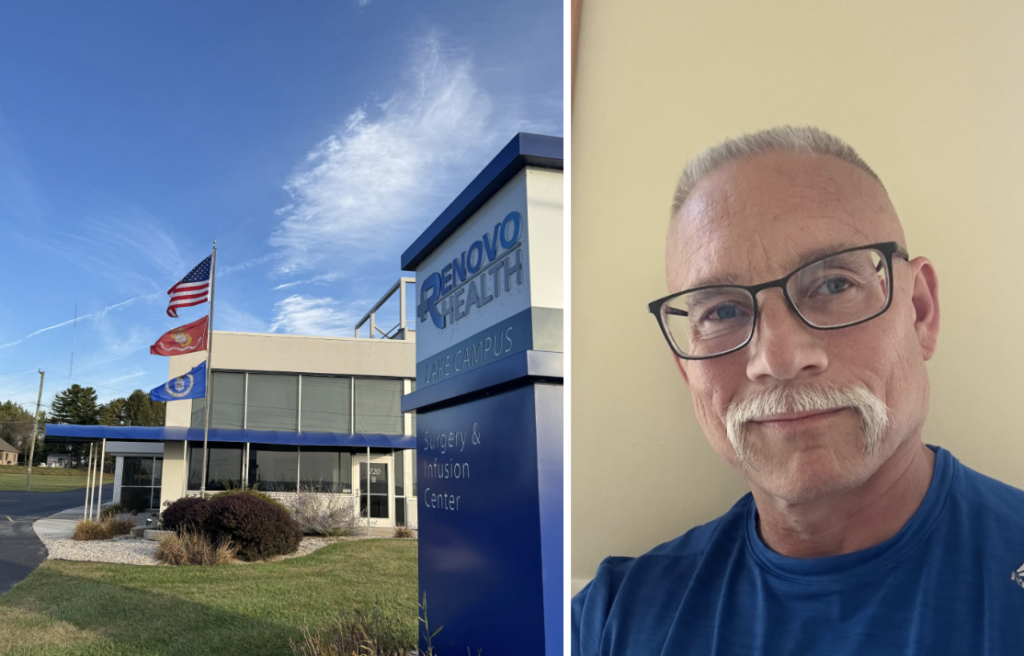
She walked in with a price quote for surgery. It came from a large legacy health system, the kind of number that lands with the weight of inevitability behind it.
Then a specialist practicing direct specialty care looked again, and her whole path changed. Dr. Steven Borene and his partner at Renovo Health brought in their surgeon, ordered additional imaging, and talked it through with her, the way you can only talk when no billing code is counting down the minutes. Their conclusion was not the one the quote had offered her. She did not need surgery. She needed physical therapy.
She avoided the operation. She saved tens of thousands of dollars. She got better. And Renovo Health made absolutely no money from any of it.
“We made absolutely no money from that interaction ourselves,” Steven says. “But we were gratified to know that we actually benefited a patient.”
That was the first patient the practice ever cared for. It told him everything he needed to know about the choice he had just made.
What is broken in insurance-driven specialty care
Steven spent 22 years inside the traditional system before he left it in April of 2024. That is a long time to stay somewhere before you decide to go, so it is worth understanding what he saw.
“My partner and I both felt like no one was accountable to patients or physicians,” he says.“The system worked perfectly to generate revenue and dependence, but not patient-centered care.”
Read that twice, because it is the quiet indictment at the center of this story. The system was not broken. It was working exactly as designed. It just was not designed for the patient, and it was not designed for the physician. It was designed for everyone in between.
Patients feel it as rushed visits, months-long waits, prior-authorization denials, and surprise bills that arrive weeks after the care. Physicians feel it as documentation written for billing instead of medicine, quotas that have nothing to do with healing, and the slow burnout that comes from fighting a payer to deliver care they already knew their patient needed. The prior-authorization burden alone is staggering: in the American Medical Association’s 2023 survey, physicians reported completing an average of 45 prior authorizations per week, and 94 percent said the process delays patient care (source below, verify before publishing).
None of that is a failure of effort. It is the structure. And the structure is what direct specialty care changes.
The turning point: 22 years, then a door
Steven did not leave on a bad day. He left on a conclusion.
After two decades, he stopped believing the next reform, the next software rollout, or the next administrator would fix the friction, because the friction was not a flaw in the machine. The friction was the machine. So he and his partner built the thing the system refused to be. They opened Renovo Health as a direct practice, licensed in Wisconsin, Minnesota, and Iowa, and they took their first patient with no insurance company standing between them and her care.
That first patient, the one who avoided surgery, is the proof of what changes when you remove the middle. The doctor could ask a question the old system had no reason to ask: is this operation actually necessary?
What is direct specialty care?
Direct specialty care is board-certified specialist medicine practiced outside the insurance billing system. The specialist contracts directly with the patient for professional time, consultations, and management, with transparent prices the patient can see before they book. The patient typically keeps their insurance for hospitalizations, surgeries, labs, and imaging, while the specialist’s expertise is paid for directly.
It is worth saying clearly what direct specialty care is not, because two comparisons come up constantly.
Is direct specialty care the same as concierge medicine?
No. Concierge medicine charges a membership fee on top of your insurance. You keep the claims, the denials, and the paperwork, and you pay extra for better access to the same tangled system. Direct specialty care does the opposite. It replaces the insurance billing relationship instead of adding a fee on top of it. It is, in the truest sense, the concierge-medicine alternative: the access and the relationship, without the retainer stacked on top of a payer.
How is it different from direct primary care?
Direct primary care put this transparent model on the map for family medicine. Direct specialty care carries the same idea into the specialties, the anesthesiologists, surgeons, rheumatologists, cardiologists, and endocrinologists that patients often wait months to see. Renovo Health is that model, built for specialists.
The value is not a discount and it is not a coupon. The value is alignment. When you take the insurer, the broker, and the billing department out of the room, the physician answers to one person, the patient in front of them. That single change is what let Steven’s team look at a surgery quote and ask whether the surgery was needed at all.
How direct specialty care helps physicians
Ask Steven why he chose this, and he answers with a principle, not a spreadsheet.
“Direct specialty care is the free market, healthy solution for much of what ails us in the healthcare system,” he says. “It puts the patient and physician into position to be the only players that really matter. And that makes for healthier patients and empowered physicians.”
Empowered physicians. That is the part most of us were not trained to expect. In a direct practice, the specialist reclaims the time that documentation and prior authorization used to swallow. There are no RVU quotas dictating how many patients must be seen in a day. There is no billing department to fund and no denials to appeal. The income is set transparently and earned directly, and it is tied to the value of the care rather than the volume of the codes. Most of all, there is a real relationship with the patient, the reason nearly all of us went into medicine in the first place.
If you are a specialist wondering whether your field can work this way, it almost certainly can, and you do not have to prove it alone. That is what the DSC Alliance membership and the direct specialty care course exist to shorten.
How direct specialty care helps patients
When Steven describes what Renovo Health can do that he could not do before, he starts with visibility.
“Renovo Health is able to help patients and payers see the multiple healthcare middlemen that bleed value from the system at the expense of the end user,” he says. “We can now accurately describe the effects of medical treatment on all aspects of their health, including their financial health.”
Financial health. That is the phrase most physicians are trained never to say out loud, because in the legacy system the cost of care is someone else’s department, a conversation that happens after the patient leaves, in an envelope that arrives weeks later. Direct specialty care moves that conversation back to where it belongs, in front of the patient, before the decision, in plain numbers.
For a patient, direct access to a specialist means the visit is as long as it needs to be. It means the price is known before the appointment, not guessed at and feared. It means messaging the actual specialist instead of a call center, getting a second opinion without a six-month wait, and, through telemedicine, reaching a specialist across state lines who practices this way. It is specialist care without insurance dictating the plan. The first Renovo patient is the clearest proof: transparent pricing, honest counsel, and a better outcome that happened to cost the practice money and save the patient a surgery.
Telemedicine widens that access further. A patient in a rural county with no local rheumatologist or endocrinologist can reach a direct specialty care physician licensed in their state, without a six-month wait and without a referral gatekeeper deciding whether the visit is allowed. Second opinions become simple rather than adversarial, because the specialist has no incentive to protect a procedure and every reason to get the answer right. For patients on high-deductible plans, who are already paying cash until they hit their deductible, a transparent direct price is frequently lower than the insurance-negotiated rate, and it is known in advance instead of arriving as a surprise. That is what accessible specialist care looks like when the plan stops dictating it.
You can find specialists who work this way in the Find a Specialist directory.
How direct specialty care helps employers and benefits brokers
Steven is blunt about the market forces working against this model, and it is where employers and brokers come in.
“Many employers and payers are not aware of this approach, and even when they are, they have taken the bait for decades that has convinced them that healthcare is increasingly complicated and that they are not capable of managing it,” he says.
For a self-funded employer or a benefits broker, direct specialty care offers something the network model rarely does: predictable, transparent specialist pricing you can actually model. Employees get faster access to specialists instead of waiting months. It pairs naturally with direct primary care and with high-deductible and self-funded plans, and it can lower downstream costs by catching the unnecessary procedure before it happens, exactly as Renovo did for its first patient. It is a way to offer meaningful specialist benefits without building and paying for a bloated network. The language here is simple and it is theirs: cost, access, outcomes, transparency.
Employers and brokers who want to build this into a benefit can start with the DSC Alliance and its directory of direct-care specialists.
What Steven would tell a specialist on the fence
This is where he is most honest, and we are keeping it honest.
He is candid that the safe move, maybe even the smart move, is to stay. To stay inside, stay compliant, stay quiet. He has decades-long relationships with physicians, many of them friends, who cannot bring themselves to risk anything outside the norm.
“The current system rewards those who play within it just enough to make them afraid that they cannot go outside of it,” he says.
That is the real fence most specialists sit on. Not a lack of skill and not a lack of demand, but a fear that has been carefully cultivated, that the system is too big and too complicated to leave. The fear is the product. A physician who believes there is no way out keeps playing by the rules that pay everyone but the patient. Steven simply decided he was not willing to trade his voice for that safety.
Where does the transparent model come from
Steven did not stumble into this. He went looking.
After reading and listening to voices like Marshall Allen, the journalist who spent years documenting how the system overcharges the people it is meant to serve, Steven and his partner traveled to the Surgery Center of Oklahoma more than three years ago to see price transparency up close, the model that center has practiced for decades. While they were there, Dr. Keith Smith, one of the earliest voices for transparent pricing in American medicine, encouraged them to do the same. They did. What began as a research trip became a blueprint, and the lesson was not complicated: transparency is not a marketing gimmick, it is a different way to run a practice, and it has worked for years for anyone willing to build it.
The movement, and where the DSC Alliance comes in
Steven only recently learned about the DSC Alliance, and he is clear about what he wants from it.
“I am looking forward to having a place for more specialists to come and practice,” he says, “so that we can expand our service lines to benefit even more patients.”
That is the whole idea. One transparent practice helps the patients who find it. A community of them changes what patients can expect, what physicians believe is possible, and what the market is forced to offer. Steven and his partner had to fly to Oklahoma and reverse-engineer a model from a center that spent decades building it. The next physician should not have to. The contracts, the pricing, the operational lessons he learned the hard way are exactly what a community is for. This is a growing movement of independent specialists rebuilding medicine around the patient, and it now has a home.
If you are a specialist who has felt what Steven felt, become a DSC Alliance member and build this with us. If you are a patient looking for a specialist who tells you the truth about your treatment and your costs in the same breath, you can reach Dr. Borene and his team at their practice website, Renovo Health, at renovohealth.care.
How to work with Dr. Steven Borene
At Renovo Health, access is the point, not the obstacle.
“Like most direct practices, patient access to medical professionals is paramount,” Steven says. “We make it easy for people to connect through our website or by calling directly. Our doctors and nurses are always available. And every connection is the start of a conversation.”
It is not transactional the way the legacy system is transactional. It is a relationship, one that lets care be adjusted and customized for every patient. His first patient avoided surgery, saved tens of thousands of dollars, and walked out healthier, and his practice earned nothing from the visit except the knowledge that it had done right by her. That is not a failure of a business model. That is the business model.
Key takeaways
Direct specialty care is board-certified specialist medicine outside insurance billing, with transparent, upfront pricing and direct access to the physician.
It is the concierge-medicine alternative, replacing insurance billing rather than adding a fee on top of it, and it carries the direct model beyond primary care into the specialties.
For physicians, it means reclaimed time, autonomy, no prior-auth treadmill, and income tied to care rather than codes. For patients, it means longer visits, prices known before booking, and direct access to the specialist.
For employers and brokers, it offers predictable, transparent specialist pricing, faster access, and a complement to self-funded and high-deductible plans.
Renovo Health’s first patient avoided an unnecessary surgery and saved thousands, while the practice earned nothing. Aligning with the patient is the model, not a threat to it.
Frequently asked questions
What is direct specialty care? Direct specialty care is board-certified specialist medicine delivered directly to the patient, outside the insurance billing system, with transparent, upfront pricing and direct access to the physician. The patient keeps their insurance for hospitalizations, surgeries, labs, and imaging.
Is direct specialty care the same as concierge medicine? No. Concierge medicine charges a membership fee on top of insurance. Direct specialty care replaces insurance billing rather than adding a fee on top of it, which is why it is often called the concierge-medicine alternative.
How can a direct care practice make money if it talks a patient out of surgery? In a transparent model, trust is the asset. Renovo Health’s first patient avoided surgery and the practice earned nothing from that visit, but the honesty that produced that outcome is what earns the loyalty, referrals, and reputation that sustain a direct practice. Aligning with the patient is the business model.
Who is Dr. Steven Borene? Dr. Steven Borene, MD, MHCDS, is an anesthesiologist with 22 years of experience and the co-founder of Renovo Health, a direct specialty care practice licensed in Wisconsin, Minnesota, and Iowa. He transitioned to direct care in April of 2024.
Who writes for the DSC Alliance blog? These features are written by Dr. Diana Girnita, MD, PhD, FACR, a double board-certified physician in rheumatology and internal medicine, founder of Rheumatologist OnCall, and co-founder of the DSC Alliance.
What is the DSC Alliance? The DSC Alliance is a physician-led community and national directory for board-certified specialists practicing direct specialty care. It educates, mentors, and advocates for specialists building independent, transparent, patient-first practices, so no specialist has to make the transition alone. You can become a member at dscalliance.org.
How do I find or join direct specialty care specialists? Patients can search the Find a Specialist directory at dscalliance.org. Physicians, employers, and brokers can learn more and join at dscalliance.org/membership.
About the author
About the author, Dr. Diana Girnita, MD, PhD, FACR. Dr. Diana Girnita is a double board-certified physician in rheumatology and internal medicine, and the founder of Rheumatologist OnCall, the first direct specialty care rheumatology practice, caring for patients across multiple U.S. states through telemedicine and in person in California. She is a co-founder of the Direct Specialty Care Alliance (DSC Alliance), a physician-led organization that educates, mentors, and advocates for specialists building independent, transparent, patient-first practices. A national speaker and educator, Dr. Girnita helped define and popularize the direct specialty care model and is a leading voice for transparent, accessible specialist care. Learn more or join the movement at dscalliance.org/membership.
